
AMD Launches Helios: A Game-Changer in AI Rack Systems
Chipmaker AMD targets Nvidia with the introduction of Helios, a revolutionary rack-scale system tailored for the computational demands of the world’s leading AI labs.
Unveiling Helios at Advancing AI Conference
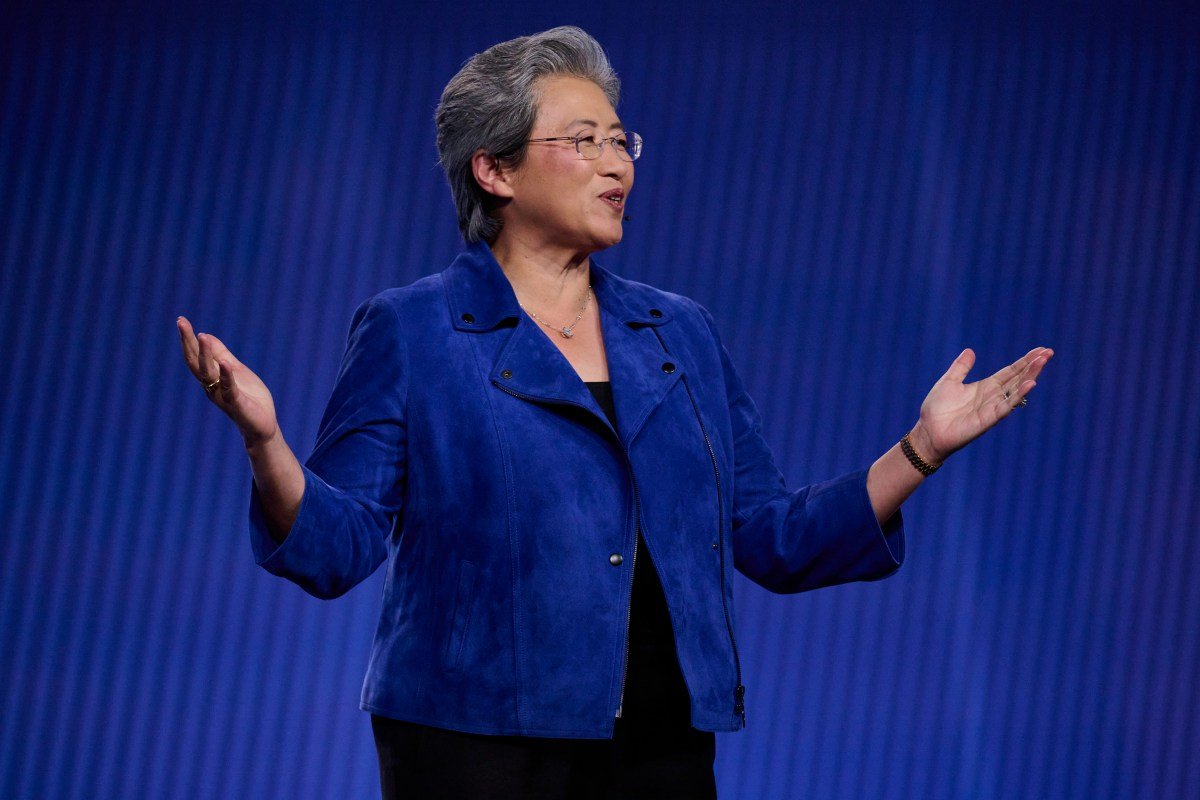
During the eagerly awaited Advancing AI conference in San Francisco, AMD Chair and CEO Dr. Lisa Su showcased the Helios AI rack system, highlighting its expanding customer base—including tech giant Microsoft—as the launch date approaches later this year. Alongside Helios, Su introduced AMD’s latest chips developed to meet the insatiable needs of the AI sector.
What is a Rack System?
Rack systems consolidate multiple processors into a single high-performance unit, specifically engineered for data centers. These systems are essential for training AI models and managing demanding computing tasks.
Performance Highlights of Helios
Dr. Su labeled Helios the tech industry’s “highest-performance AI rack,” asserting it’s capable of training and running the most complex frontier models at an unprecedented scale. The system is set to be utilized by top AI companies requiring gigawatt-scale resources.
Competing with Nvidia
Nvidia has historically led this market with its Vera Rubin and Grace Blackwell rack systems. AMD’s Helios aims to change the game, reportedly surpassing Vera Rubin in several performance metrics, as noted by The Register.
Customer Partnerships and Deployments
Initially revealed in 2025 and showcased at CES 2026, Helios has attracted notable clients including OpenAI, Meta, Oracle, Anthropic, and Microsoft, all planning to implement the system. Microsoft CEO Satya Nadella announced intentions to enhance their Azure infrastructure with Helios. In addition, AMD and Anthropic confirmed a strategic partnership to deploy up to two gigawatts of GPUs using the new rack system.
New Venice-X CPU Announced
At the conference, AMD also introduced its Venice-X CPU, designed for data centers to handle high-computing workloads, with a planned release in 2027.
The Future of AI and Chip Demand
Dr. Su projected that by 2030, chips powering AI will significantly contribute to the overall computing market. This surge is fueled by a rising demand for computational resources, particularly with the advent of advanced AI systems.
“When you engage an AI agent, it must navigate numerous tasks, requiring extensive processing power,” she explained. “As we advance towards 2030, we anticipate the AI accelerator market will reach around $1.4 trillion, potentially rivaling the entire semiconductor market today.”
Anticipating Market Changes
Su emphasized that GPUs are likely to dominate this market, as AI algorithms are still developing. The evolving workloads favor flexibility within the silicon ecosystem, indicating a bright future for AI computing.
When you make a purchase through links in our articles, we may earn a small commission. This does not impact our editorial independence.
Here are five FAQs regarding AMD’s Helios AI rack-scale system and its competition with Nvidia:
FAQ 1: What is the AMD Helios AI rack-scale system?
Answer:
The AMD Helios AI rack-scale system is a powerful computing infrastructure designed to enhance artificial intelligence (AI) and machine learning workloads. It utilizes AMD’s advanced GPU and CPU technologies to deliver high-performance computing capabilities, scalability, and efficiency, aiming to challenge Nvidia’s dominance in the AI market.
FAQ 2: How does AMD’s Helios AI system compare to Nvidia’s offerings?
Answer:
AMD’s Helios system provides a competitive alternative to Nvidia by integrating its Radeon GPUs and EPYC processors, aimed at delivering superior performance per watt and cost efficiency. While Nvidia has a strong foothold in AI with its CUDA ecosystem, AMD’s Helios system emphasizes open standards and flexibility, allowing for more customizable solutions for specific AI tasks.
FAQ 3: What industries can benefit from the AMD Helios AI system?
Answer:
The AMD Helios AI system is designed to cater to various industries including healthcare, finance, automotive, and manufacturing. These sectors can leverage its capabilities for applications such as predictive analytics, natural language processing, image recognition, and real-time data processing, enhancing operational efficiencies and innovation.
FAQ 4: Can the AMD Helios AI system support large-scale deployments?
Answer:
Yes, the AMD Helios AI rack-scale system is designed for scalability, enabling organizations to easily expand their computing resources as needed. Its architecture supports large-scale deployments, making it suitable for both enterprise-level and research-intensive projects that require significant computational power.
FAQ 5: What are the key features of the AMD Helios AI rack-scale system?
Answer:
Key features of the AMD Helios AI system include high-performance GPUs, AMD EPYC processors for efficient data handling, support for various AI frameworks, and an architecture optimized for parallel computing. Additionally, it emphasizes energy efficiency and cost-effectiveness, making it a strong contender in the growing AI infrastructure market.
Related posts:
- Cohere Achieves $6.8B Valuation as AMD, Nvidia, and Salesforce Boost Their Investments
- AI in Manufacturing: Addressing Challenges with Data and Talent
- Non-AI Startups: Challenges Ahead in Securing VC Funding
- Mantis Biotech Creates ‘Digital Twins’ of Humans to Address Data Availability Challenges in Medicine
No comment yet, add your voice below!