
OpenAI Claims Breakthrough: AI Disproves Geometry Conjecture First Posed by Paul Erdős
OpenAI has announced that its new reasoning model has generated an original mathematical proof that disproves a renowned unsolved conjecture in geometry, initially proposed by Paul Erdős in 1946.
A Bold Claim: A Pattern of Controversy
This isn’t the first time OpenAI has made such audacious claims. Just seven months ago, the company’s former VP, Kevin Weil, posted on X that “GPT-5 found solutions to 10 (!) previously unsolved Erdős problems and made progress on 11 others.”
Historical Context: Missteps and Rival Reactions
However, it was later revealed that GPT-5 did not actually solve those problems; it merely identified established solutions already present in existing literature. This misstep attracted criticism from competitors like Yann LeCun and Google DeepMind CEO Demis Hassabis, leading Weil to retract his earlier statement.
OpenAI’s New Claim: Backed by Mathematicians
In a bid to avoid previous errors, OpenAI accompanied its latest announcement with formal remarks from mathematicians such as Noga Alon, Melanie Wood, and Thomas Bloom—who manages the Erdős Problems website and previously condemned Weil’s claims as “a dramatic misrepresentation.”
Breaking Long-held Beliefs in Geometry
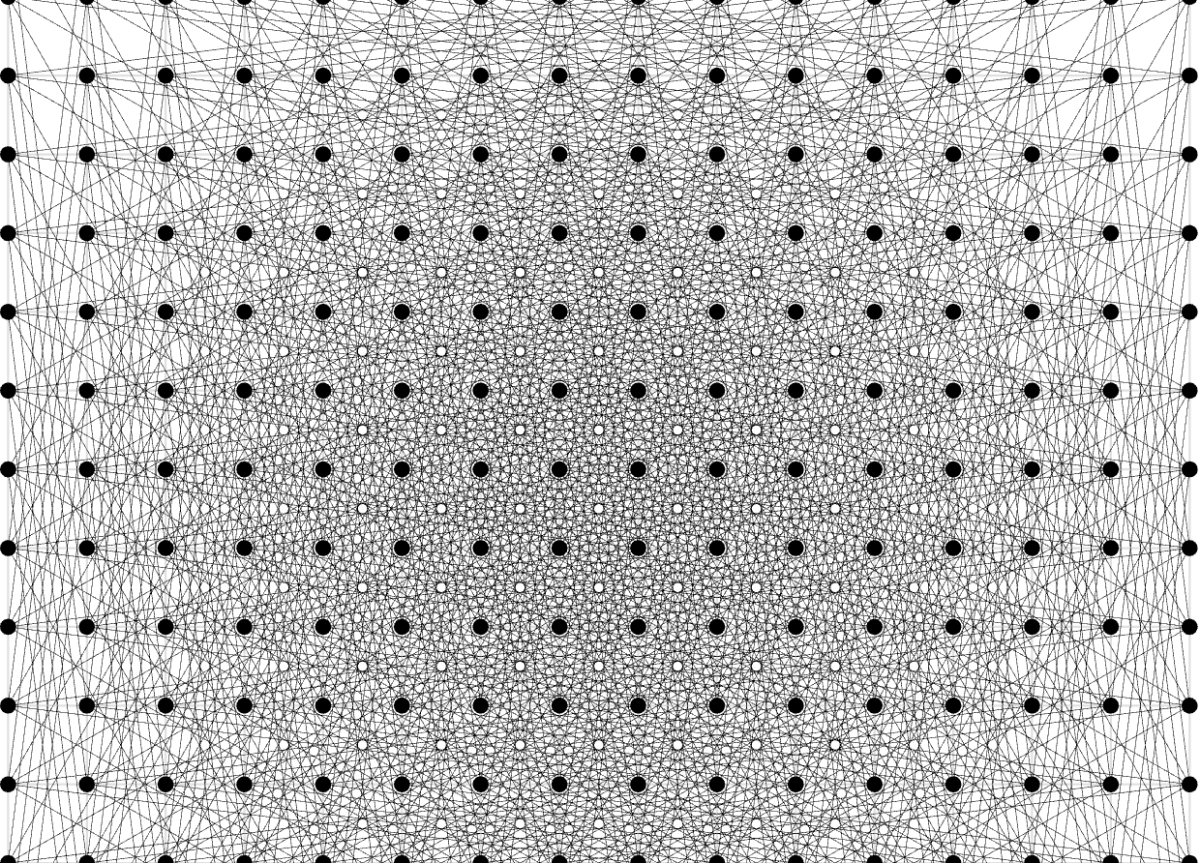
OpenAI stated, “For nearly 80 years, mathematicians believed the best possible solutions resembled square grids. An OpenAI model has now disproved that belief, discovering an entirely new family of constructions that performs better.”
A Landmark Moment in AI and Mathematics
According to OpenAI, this achievement signifies “the first time AI has autonomously solved a prominent open problem central to a field of mathematics.” Remarkably, this proof arose from a general-purpose reasoning model, not a dedicated mathematics-solving system.
The Broader Implications: AI’s Expanding Role
OpenAI emphasizes that this development indicates AI systems can now effectively handle complex reasoning tasks and connect disparate ideas across various fields, including biology, physics, engineering, and medicine.
A Statement from Thomas Bloom
“AI is helping us to more fully explore the cathedral of mathematics we have built over the centuries,” Bloom noted. “What other unseen wonders are waiting in the wings?”
When you purchase through links in our articles, we may earn a small commission. This doesn’t affect our editorial independence.
Here are five FAQs regarding OpenAI’s claim about solving an 80-year-old math problem:
FAQ 1: What math problem did OpenAI claim to solve?
Answer: OpenAI claimed to have solved a long-standing problem in mathematics known as the "P vs NP" problem, which questions whether every problem whose solution can be quickly verified can also be quickly solved.
FAQ 2: Why is the P vs NP problem significant?
Answer: The P vs NP problem is one of the seven "Millennium Prize Problems" designated by the Clay Mathematics Institute. Solving it has profound implications for fields such as computer science, cryptography, and optimization, as it determines the limits of what can be computed efficiently.
FAQ 3: How did OpenAI approach solving this problem?
Answer: OpenAI utilized advanced machine learning algorithms and frameworks to analyze existing mathematical theories and generate new insights. Their approach combined computational power with innovative problem-solving techniques to explore the complexities of the problem.
FAQ 4: What are the implications of this claim?
Answer: If confirmed, this solution could revolutionize computational theory and dramatically impact various industries by changing how algorithms are designed, potentially leading to breakthroughs in AI, security, and complex systems.
FAQ 5: Has the solution been peer-reviewed?
Answer: As of now, the solution is pending peer review and validation by the broader mathematical community. It must undergo rigorous scrutiny and replication of results before any definitive conclusions can be drawn about its validity.
No comment yet, add your voice below!