
Exploring the Bee AI Wrist Gadget: A Personal Assistant on Your Wrist
I recently had the chance to try out Bee, an AI wrist wearable acquired by Amazon last year and recently updated with a host of new features.
What is Bee and How Does it Work?
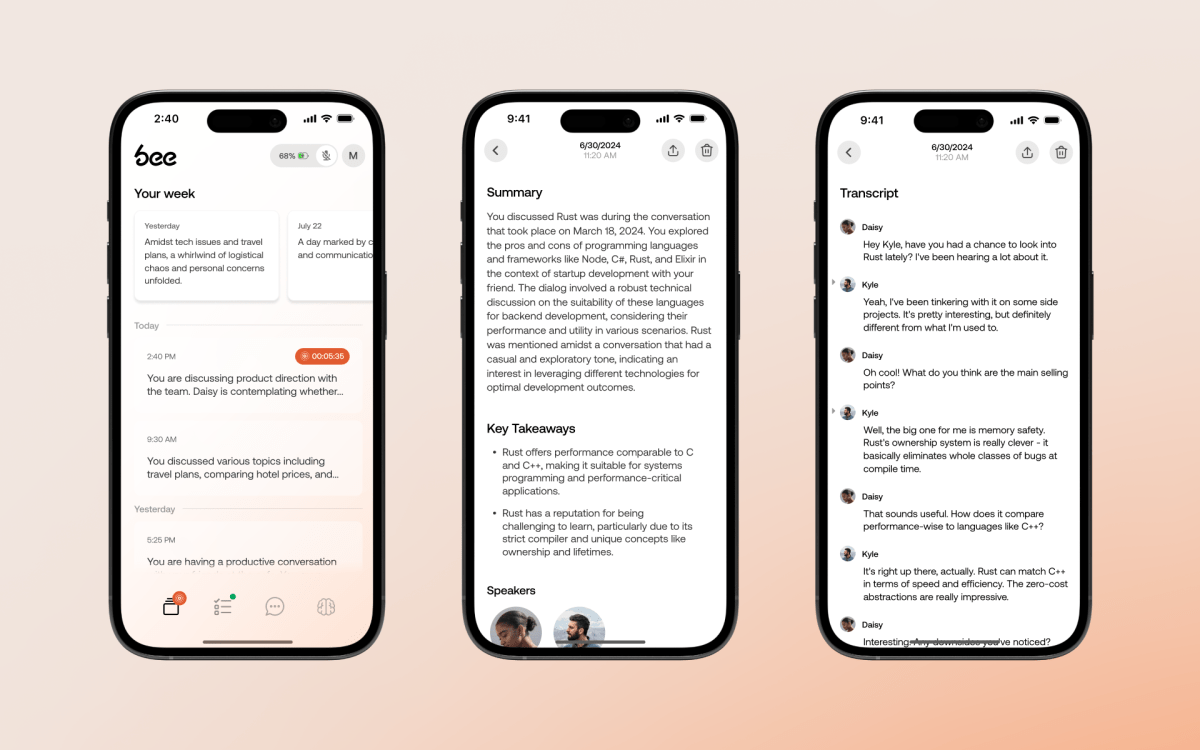
Like other AI wearables, Bee acts as a personal assistant, recording, transcribing, and summarizing your conversations throughout the day. This feature is particularly beneficial for those who struggle with memory or simply want to stay organized. When synced with your calendar, Bee sends alerts and reminders for upcoming tasks and events.
An Overview of Bee’s Functionality
TechCrunch has previously covered Bee, highlighting its straightforward operation. Users simply power it up, wear it, sync it with the Bee mobile app, and input some basic information. The device features a built-in recorder activated by a button press, with a green light indicating when it’s recording. After a conversation, the app automatically generates an easy-to-read summary and a full transcription.
Balancing Privacy with Utility
While the concept is intriguing, I have some reservations due to my focus on digital privacy. Living in an era of constant surveillance, I’m hesitant about the idea of wearing a device that records all day long. Yet, I must acknowledge the potential benefits of Bee in specific scenarios.
Bee’s Professional Applications
In professional settings, Bee could serve as a reliable assistant, especially for those overwhelmed by back-to-back meetings. After a recent work call, I activated Bee, receiving a concise summary of our discussion, complete with breakdowns for easy review. While similar transcription services exist (like Otter or Granola), Bee’s integration into your daily workflow could be advantageous.
Accuracy and Limitations of Transcriptions
Although Bee excels at summarizing conversations, its transcriptions aren’t flawless. Critics have pointed out that users often need to identify speakers manually, and during my call, some parts of the dialogue were missing—though nothing significant was lost. This may affect the overall utility for users expecting thorough transcripts.
Testing Bee in Casual Settings
I also took Bee to a movie night with friends, leaving it running while we enjoyed Reservoir Dogs. Thankfully, the device recognized our activity, labeling the summary “Tarantino Film Scene Analysis”—a humorous twist on its capabilities. Still, I question the appropriateness of this device in personal contexts.
Concerns Over Privacy and Data Collection
While Bee shows promise as a business tool, its personal use raises concerns about privacy. For optimal performance, it requires extensive permissions, such as access to your location, contacts, and even health data. This extensive data collection is stored in the cloud, which may alarm those wary of digital privacy.
Security Measures and Future Potential
Bee claims to implement encryption for user data and undergoes third-party security audits. Despite this, Amazon has faced data security issues in the past, which adds an element of caution. If Bee could transition to a device that operates entirely locally, it might pique my interest.
Final Thoughts on Bee
Overall, Bee is a fascinating piece of technology with potential for professional applications. However, its invasiveness for personal use might deter some users.
When you purchase through links in our articles, we may earn a small commission. This doesn’t affect our editorial independence.
Sure! Here are five FAQs about Amazon’s Bee wearable, addressing both intrigue and concerns:
FAQ 1: What is the Amazon Bee wearable?
Answer: The Amazon Bee wearable is a smart device designed to track various health and wellness metrics, such as heart rate, sleep patterns, and physical activity. It aims to provide users with insights into their health habits and encourage a healthier lifestyle.
FAQ 2: How does the Bee wearable collect data?
Answer: The Bee wearable collects data through sensors that monitor biometric information. It syncs with the Amazon app to provide real-time feedback and analytics, allowing you to see trends in your health and wellness over time.
FAQ 3: Is my personal data safe while using the Bee wearable?
Answer: Amazon has stated that it prioritizes user privacy and employs encryption to protect personal data. However, as with any connected device, it’s essential to review privacy settings and understand how your data is collected, used, and shared.
FAQ 4: Why do some users feel creeped out by the Bee wearable?
Answer: Some users may feel uneasy about the extent of data collection, especially if they are concerned about constant monitoring or the implications of sharing personal health information. The idea of being tracked can raise privacy and security concerns for many individuals.
FAQ 5: What are the benefits of using the Bee wearable despite the creepiness factor?
Answer: Despite privacy concerns, many users find value in the insights the Bee wearable provides. It can motivate healthier lifestyle choices, track progress towards fitness goals, and enhance overall well-being through personalized feedback.
No comment yet, add your voice below!