
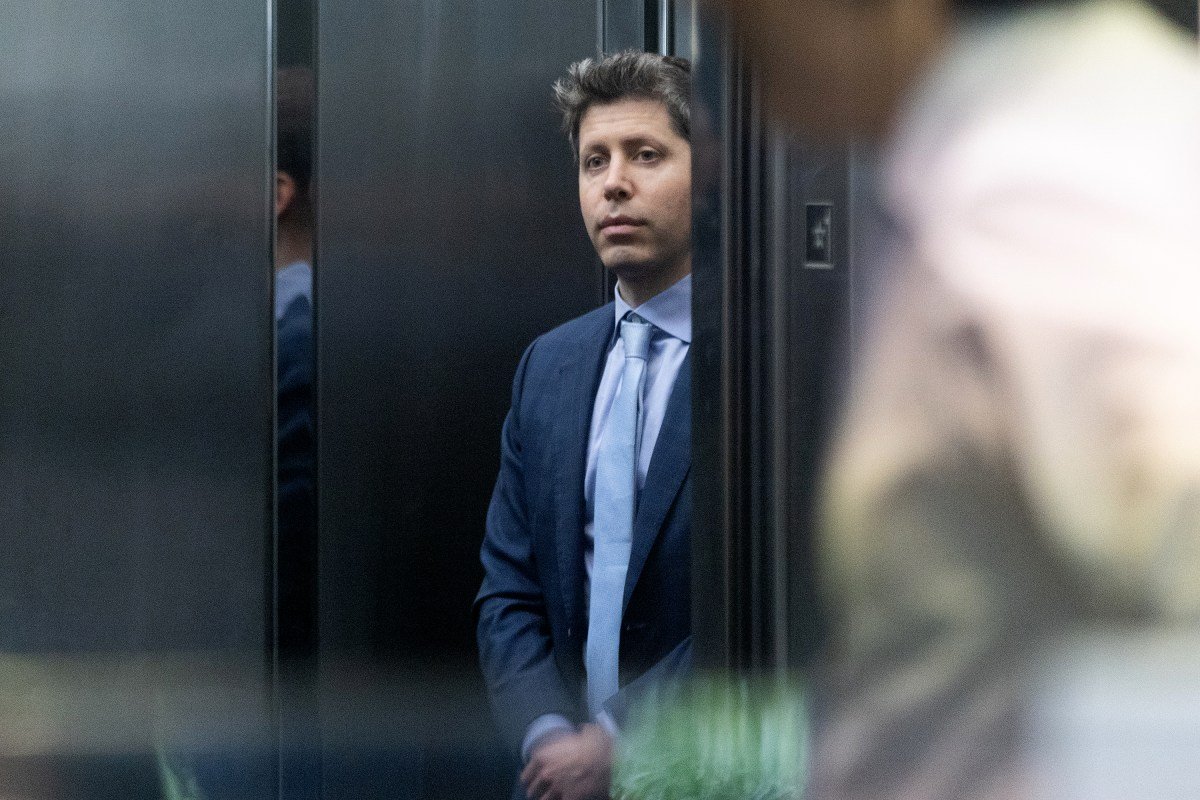
Sam Altman Defends OpenAI Against Elon Musk’s Lawsuit
In a pivotal courtroom moment, OpenAI’s CEO Sam Altman addresses allegations from co-founder Elon Musk regarding the company’s corporate structure.
Musk’s Claims: A “Stolen Charity”?
As proceedings began, Altman was confronted with Musk’s assertion that OpenAI’s founders had “stolen a charity” by forming a for-profit subsidiary for marketing AI products. After a thoughtful pause, Altman responded, “It feels difficult to even wrap my head around that framing. We created one of the largest charities in the world. This foundation is doing incredible work and will do much more.”
OpenAI’s Transformation and Asset Management
Musk’s legal team emphasized that OpenAI’s foundation, boasting assets of approximately $200 billion, lacked full-time staff until recently. In his testimony, OpenAI board chair Bret Taylor clarified that this was merely due to the complexities of converting OpenAI equity to cash, a process completed during the organization’s recent restructuring in 2025.
Safety Concerns Amid Commercial Growth
A key argument from Musk’s attorneys questioned whether OpenAI’s commitment to safety had diminished as the company’s commercial influence expanded. In response, Altman recounted a significant moment from 2017 when Musk’s emphasis on control raised concerns for him. “His specific plans on safety made me worry,” Altman admitted.
High-Stakes Safety Discussions
Recalling a “particularly hair-raising moment,” Altman described Musk’s response to a hypothetical scenario in which he died while overseeing a for-profit OpenAI. Musk suggested, “maybe OpenAI should pass to my children,” which alarmed Altman, who believed that advanced AI should not be under the control of any single individual.
The Differing Management Styles
Altman further pointed out that Musk’s management tactics, effective in engineering and manufacturing, fell short in a research environment like OpenAI. “I don’t think Mr. Musk understood how to run a good research lab,” Altman stated. He revealed that Musk’s demands for ranking researchers and evaluating their contributions had a detrimental impact on the organization’s culture.
Defending Founders and Collaborating with Musk
Throughout the testimony, Altman took a stand for the “sweat equity” of co-founders Greg Brockman and Ilya Sutskever, who were leading OpenAI while Musk pursued other initiatives. Following unresolved tensions, Musk departed from OpenAI’s board and began competing with his own AI endeavors at Tesla and his new startup, xAI. However, Altman maintained communication with Musk, providing updates and seeking his guidance and support.
Insightful Meetings and Collaboration
OpenAI’s legal representatives indicated that Musk was kept informed and invited to engage in investments that his lawsuits later claimed corrupted the nonprofit’s integrity. Recalling a Microsoft investment discussion in 2018, Altman remarked that “unlike many meetings with Mr. Musk, this was a good vibes meeting,” highlighting a moment when Musk shared amusing memes with the team.
When you purchase through links in our articles, we may earn a small commission. This doesn’t affect our editorial independence.
Here are five FAQs based on the topic of Elon Musk considering transferring control of OpenAI to his children, along with Sam Altman’s testimony.
FAQ 1: Why did Elon Musk consider handing OpenAI to his children?
Answer: Elon Musk mulled over the idea of transferring control of OpenAI to his children as part of a broader vision for ensuring the alignment of AI development with human values. He believes that the next generation might be better equipped to handle the ethical implications and responsibilities associated with AI technologies.
FAQ 2: What did Sam Altman testify regarding Musk’s intentions with OpenAI?
Answer: During his testimony, Sam Altman explained that while Musk had expressed various ideas regarding the future of OpenAI, including the possibility of handing it to his children, the practicalities and implications of such a move were complex. Altman emphasized the importance of governance and oversight in the rapidly evolving AI landscape.
FAQ 3: What implications would transferring OpenAI to Musk’s children have?
Answer: Transferring OpenAI to Musk’s children could have significant implications, including potential changes in leadership philosophy, ethical priorities, and strategic directions. It raises questions about the involvement of inexperienced individuals in high-stakes AI governance, potentially impacting the organization’s mission and focus.
FAQ 4: How do experts view the control of AI organizations like OpenAI?
Answer: Experts typically emphasize the need for accountability, transparency, and diverse perspectives in AI governance. Many advocate for organizational structures that include a range of stakeholders to mitigate risks associated with unchecked power and ensure that AI advancements are beneficial to society as a whole.
FAQ 5: What are the potential risks associated with familial control of AI organizations?
Answer: Familial control of AI organizations may lead to nepotism and a lack of rigorous oversight. Risks include the potential prioritization of personal interests over societal needs, reduced innovation due to limited perspectives, and possible mishandling of ethical considerations in AI deployments. Balancing influence with responsibility is crucial to mitigate these concerns.
Related posts:
- Musk Seeks Up to $134 Billion in OpenAI Lawsuit, Even with $700 Billion Fortune
- OpenAI CEO Sam Altman to Visit India as AI Leaders Gather in New Delhi: Sources
- Sam Altman of OpenAI Unveils Pentagon Agreement Featuring ‘Technical Safeguards’
- Introducing OpenAI o1: Advancing AI’s Reasoning Abilities for Complex Problem Solving
No comment yet, add your voice below!